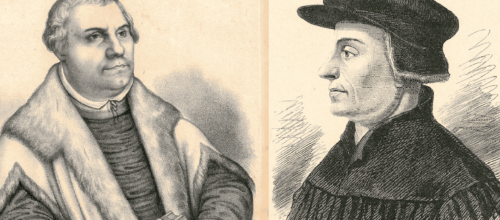
Luther and Zwingli
In the year 1529, Martin Luther and Ulrich Zwingli came face to face in the city of Marburg, Germany for a discussion on political unity among protestants.

In the year 1529, Martin Luther and Ulrich Zwingli came face to face in the city of Marburg, Germany for a discussion on political unity among protestants.
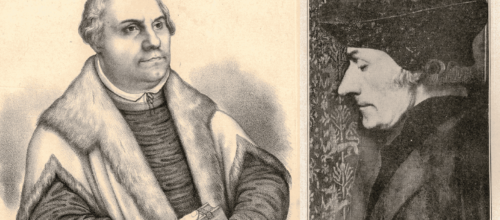
There are few men of the 15th and 16th centuries that deserve our attention more than Erasmus Desiderius of Rotterdam. He represents the pinnacle of Christian humanism, an intellectual movement that revitalized classical and biblical scholarship north of the Alps.
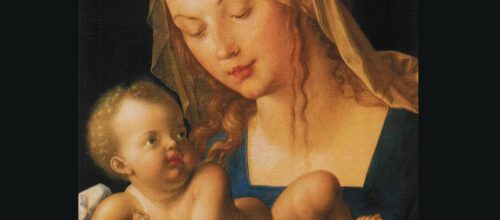
It’s probably not what you think. In his devotional writings on the Magnificat, Luther carefully outlines how we should and should not honor this “Most Blessed Virgin Mother.”
According to this schema Luther saw all of human life ordered across three spheres of structured relationships: the politia, the oeconomia, and the ecclesia.
What benefits do we gain from Jesus’ ascension? Lutheran Reformers in their sermons point us to the scriptural answers to these questions. They emphasize Christ’s victory over sin and his continual presence with his church in the world.
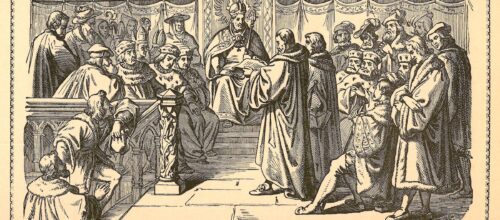
Shortly after the death of Luther in 1546, Pope Paul the III entered into an agreement with the Holy Roman Emperor, Charles the V. This agreement stipulated that Charles would go to war against everyone who opposed the Council of Trent. The main target of this agreement was the Smalkaldic League, a group of German princes who supported Luther’s Reformation.
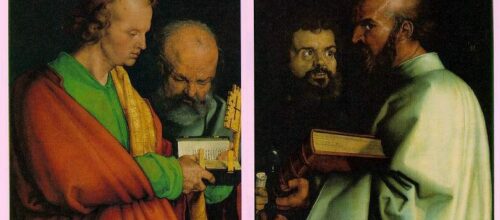
Both Lutherans and Roman Catholics claim Albrecht Dürer as their own. So what was he? Lutheran or Roman Catholic
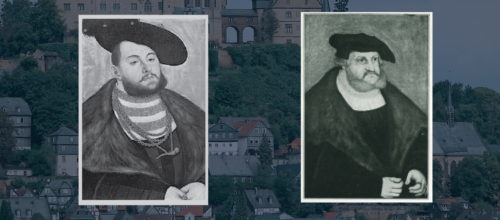
Martin Luther, along with John Calvin, Ulrich Zwingli, Martin Bucer, and Thomas Cranmer are often referred to as the “Magisterial Reformers.” By “magisterial” early modern historians typically mean that they reformed their respective regional churches with the help of local magistrates
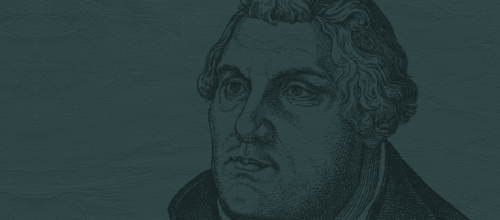
In the midst of a world whose consideration of Christ’s death is perhaps not so different than our own, Luther published a Good Friday sermon: “A Sermon on how to Contemplate Christ’s Holy Sufferings.” This sermon appeared in pamphlet form in 1519...
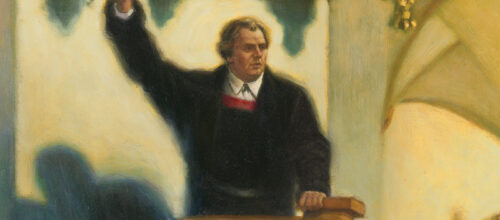
In this sermon, Luther determined to set the record straight concerning man’s contemplation of Christ’s sufferings.

The resurrection is the foundation of the Christian faith. This teaching is one of the fundamental articles of the faith.
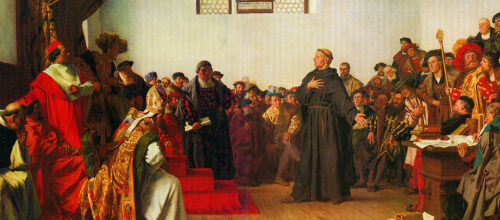
On March 31st 1515 Pope Leo X issued a bull of plenary indulgence to remove sins’ temporal penalties that clung to the souls of the living and the dead.
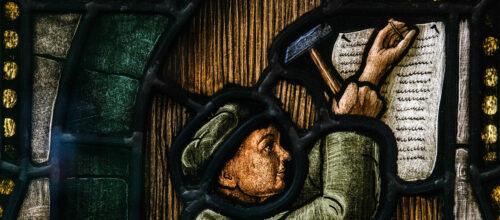
The events of October 31st 1517, the day that Luther nailed his Ninety-Five Theses to the church door in Wittenberg, were not set in motion by a man’s ambitious vision to revolutionize the spirituality of the west. Nor were they set in motion by Luther’s iconoclastic vainglory that sought to topple the ancient powers of tradition and the papacy. Rather, Luther swung his hammer as a pastor. He cared for the eternal welfare of his flock.
If you want to start an argument among Lutherans, just bring up the topic of worship and the liturgy. What was Luther’s preference? Whose side was he on?
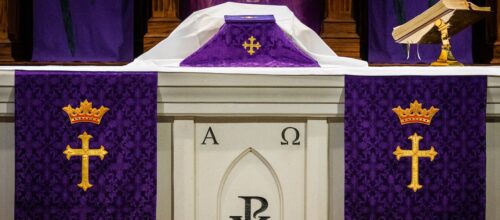
Each year, the Christian church embarks on a forty-day journey leading up to Easter, known as the season of Lent. When discussing Lenten liturgical practices of Lutherans, one can distinguish three categories into which each practice can be placed: Visual, Historical/Traditional, and Emotional/Spiritual.