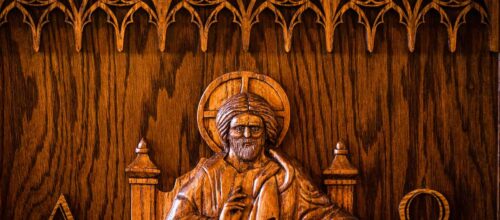
Formula of Concord Study: Article VII
The seventh article in the Formula of Concord deals chiefly with the controversy stirred up within the churches of the Lutheran confession by the Sacramentarians.

The seventh article in the Formula of Concord deals chiefly with the controversy stirred up within the churches of the Lutheran confession by the Sacramentarians.
The devil hates and attacks the kingdom of grace. He stands in opposition with his weapons of the flesh, sin, and death. Therefore, Jesus wants us to pray that...
Praying for a kingdom seems a bit strange for citizens of the 21st century. We’re used to parliaments, congresses, representatives, and presidents.
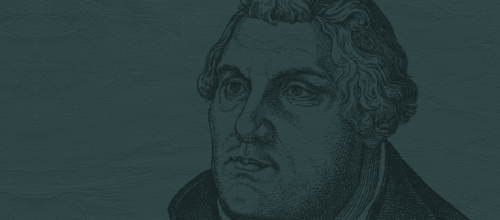
Those who have read Luther’s public writings might have a certain perception of what they would expect his other works to look like. However, Luther was also a very prolific writer of private letters.
In Galatians 5:16-17 St. Paul describes the conflict, within the believer, between the flesh and the Spirit, which are opposed to each other. Luther writes, “When someone becomes aware of this battle of the flesh...
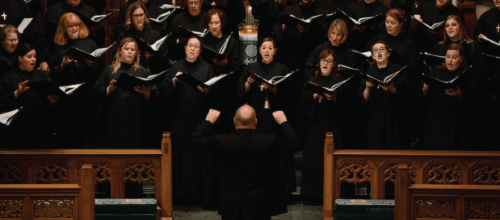
The uplifting expression of faith and joy at Christ’s second coming in “The Bridegroom Soon Will Call Us” (LSB 514) by Johann Walter and Michael Praetorius reminds us that there is meaningful history in so many of our great Lutheran hymns.
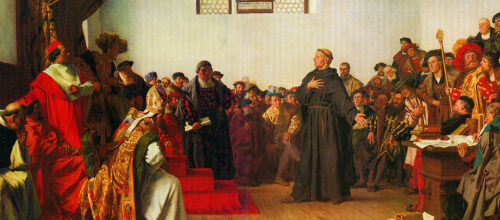
How free can one be? According to Martin Luther, human beings can be fully free toward God and toward one another.
Instead of preaching the Gospel of forgiveness and salvation by grace through faith in Christ, apart from works of the Law (Gal. 3:16), the false teachers in Galatia were peddling a religion of works based on the Law.
Simply put, the kingdom of the right is the Church, both in earth and heaven. In Luther’s On Temporal Authority, the reformer refers to this as “the kingdom of God.”
Since the twentieth century, Lutherans have spoken about a “two-kingdoms” doctrine to work out the relationship between church and state.
Even during Luther’s lifetime, a strong “antinomian” (against the Law) spirit had risen up among certain theologians who claimed that, once the Gospel regenerates the heart, the Law is no longer needed.
If you are a Lutheran, chances are that the music of Philipp Nicolai has delighted your ears and his words have flowed joyfully from your tongue.
Luther’s Reformation hymn, “Lord, Keep Us Steadfast in Your Word” (LSB 655) is one of his best known compositions. When it was published in 1542, it appeared with the subtitle, “A Children’s Hymn, to be Sung Against the Two Archenemies of Christ and His Holy Church, the Pope and Turk.”[1]
Books are like buildings. Think of them as constructed with words and thoughts rather than with bricks and mortar.
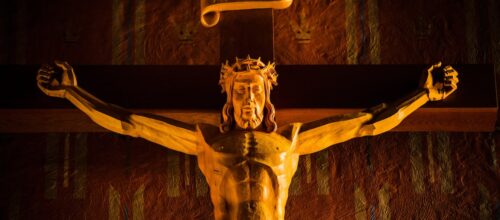
Luther said, “The cross alone is our theology.” Another way to say this is Solus Christus, or “Christ alone” saves us.