Studying God’s Word: Meditatio
For most of us, meditation seems to be antithetical to orthodox Christianity. We associate it with techniques like deep breathing, posture, and the recitation of words without content.

For most of us, meditation seems to be antithetical to orthodox Christianity. We associate it with techniques like deep breathing, posture, and the recitation of words without content.

The Chief Steward was written by stewardship counselor J.E. Herrmann in the 1950s.
Oratio, Mediatatio, Tentatio. Prayer, meditation, and the struggle against the flesh and Satan. Through these means, God makes a theologian.

In the first seven verses of chapter 4, St. Paul lays out a beautiful description of how “in the fullness of time God sent forth his Son...

The presentation of the Augsburg Confession was a foundational moment in the Lutheran Church. On June 25, 1530, the confession of the Lutheran estates of the Holy Roman Empire was read before Emperor Charles V at the Diet of Augsburg.
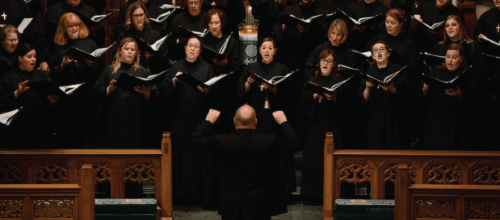
Our hymnal is a treasury of devotions. Although we mainly think of hymns in the context of corporate worship, they are also perfectly suited for devotional use in the home.
“Am I really saved? Am I doing enough? Will God even recognize my good works on Judgment Day?” These sorts of questions are born out of the Law, which always demands and never gives.
The confession of the person and work of Jesus Christ—His justification of sinful humanity—forms the heart of theology, and informs all of the Church’s confession and practice.
As the basis for “We All Believe in One True God,” Martin Luther used the first two lines of a single-stanza German medieval hymn first found with Latin and German words in 1417 and expanded it to three stanzas—individually paraphrasing each of the three articles of the creed.

The Confessions are not just a history book of what was once at stake for true Lutheran confession, but they are also a description of what is still at stake for true Lutheran confession.

Don’t be afraid to read the Bible. God has set forth His Law and His Gospel in the plainest terms.

Faith is only as good as its object. This is the danger of misunderstanding Sola Fide.
The heart of the Lutheran Church’s beliefs is the doctrine of justification, the teaching of how we are declared righteous in God’s sight.
Distinguishing between the Law and the Gospel is one of the highest and most precious arts which every Christian would do well to learn.

Luther says that this article on the Holy Spirit is about us being made holy.