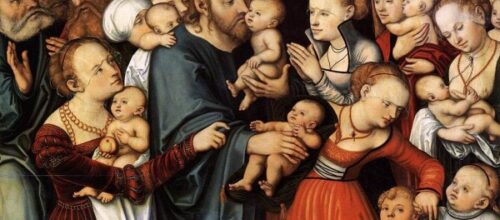
Cranach’s “Let the Little Children Come to Me”
Although Cranach was not an ordained pastor, he was most certainly a theologian, using his skills with paint and brush to visually proclaim the mercy of Christ.

Although Cranach was not an ordained pastor, he was most certainly a theologian, using his skills with paint and brush to visually proclaim the mercy of Christ.
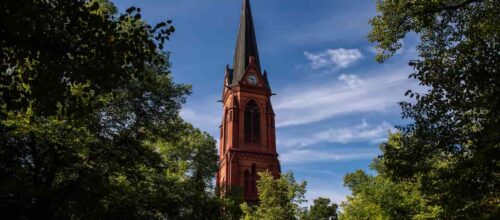
The contributions of Nicolaus Decius to Lutheran hymnody, although few, actually predate the first published hymns of Martin Luther by one year.

I am pleased to offer this brief but worthwhile Hurricane Harvey-related commentary by my esteemed predecessor as Director of LCMS Disaster Response, the Rev. Glenn F. Merritt, now retired in Arlington, Texas.
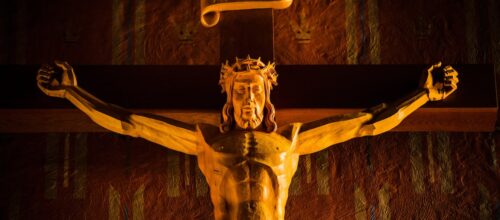
In the Large Catechism on the First Commandment Luther says, “There has never been a nation so wicked that it did not establish and maintain some sort of worship. All people have set up their own god, to whom they looked for blessings, help, and comfort.
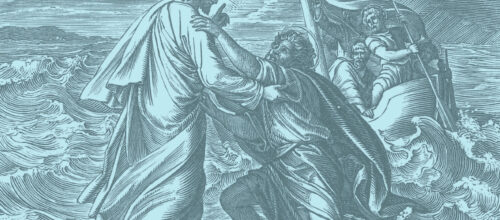
These 40 devotions — which each include a Scripture passage, a meditation, a prayer and a hymn — are focused on bringing God’s comfort and peace to those who are struggling after a disaster or other crisis.
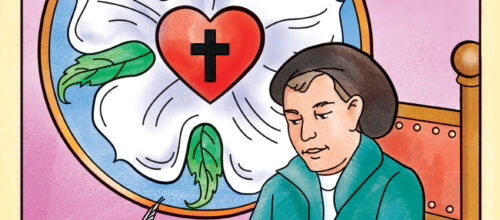
Reformation A-Z is a booklet of activities that will help educators teach specific parts of the Reformation in the classroom, or help families engage in Reformation learning at home!
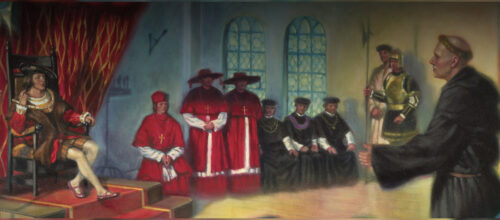
Get acquainted with the Wittenberg and Europe that Luther experienced! Learn about Wittenberg’s important landmarks and the geography of Luther’s time, and discover how they might have affected the Reformation.
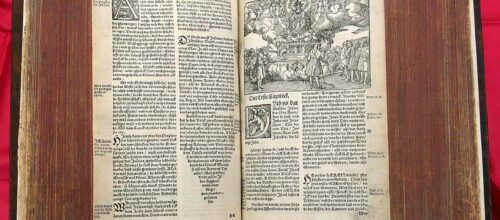
Is the Bible true? Is it really reliable or is it full of errors? Doesn’t it contradict itself? Luther and other Lutheran Reformers answered these questions in no uncertain terms, defending the inerrancy of Scripture with gusto.
Since Martin Luther, Lutherans have held to the clarity of Scripture, insisting that Scripture is clear. But what does that mean?
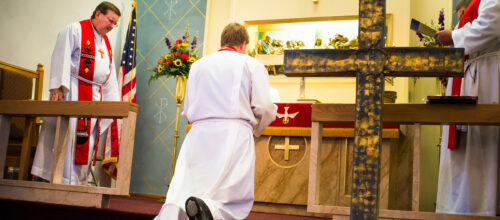
*This is Part two of seven in a series of Basic Theology of Mercy Work Series* Lutheran Congregational Mercy Work There has recently been a resurgence of congregational mercy work…
During the years leading up to the Reformation, the Roman papacy had convinced much of Christendom that the Scriptures were not enough to settle questions of doctrine and life.

LCMS Stewardship Ministry shares insight into how individuals mature as Christian stewards. Stewardship maturity begins at the baptismal font, the altar and the pulpit. But it doesn’t stop there.
Central to the project of the Lutheran Reformation was the restoration of the supreme authority of Scripture within the life of the Church.
Johann Gerhard (1582-1637) died as a professor of theology at the University of Jena, a post he had held for twenty-one years. His popularity there was evidenced by the fact that he received and turned down over twenty calls during his time as a professor.

Looking for ways to joyfully share the Gospel in a “real world” context? Want to virtually tour historic Reformation sites or hear more about mission work in Santo Domingo? President Harrison shares this and much more in this month’s Life Together News Digest.