Martin Luther’s ‘On the Freedom of a Christian’
"A Christian is an utterly free man, lord of all, subject to none. A Christian is an utterly dutiful man, servant of all, subject to all."

"A Christian is an utterly free man, lord of all, subject to none. A Christian is an utterly dutiful man, servant of all, subject to all."

Christ came to seek and to save the lost, which is our mission as the church. As we move towards Easter, we remember that Death has already been deprived of his power. The hard part is over, the resurrection is near and it is as if we have only a little toe in the grave! God grant you a blessed Easter in the name of Christ.
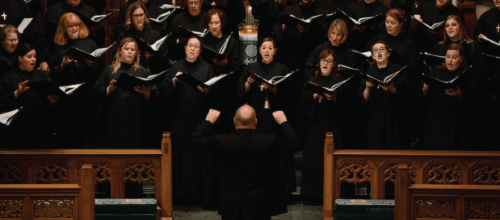
One of Luther’s earliest compositions was “From Depths of Woe I Cry to Thee,” a paraphrase of Psalm 130 (Aus tiefer Not schrei’ ich zu dir, LSB 607). He wrote this hymn in 1523, around the time that he was revising the Latin Mass.
The Lutheran Confessions see repentance differently on several points. First, they insist that you need to repent, regardless of who you are. Second...

Los hispanohablantes ahora pueden conocer la vocación de diaconisa en su propio idioma.

This new resource from LCMS Health Ministry provides straightforward and inexpensive ideas to help volunteers — Sunday school teachers, VBS leaders, youth workers and others — include people of all abilities in their next church event.
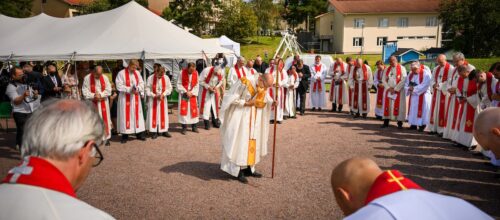
From its roots in the Reformation to its carefully preserved remnant today, the history of confessional Lutheranism in Finland is a testament to the work of the Lord establishing and keeping His Church throughout all generations in every corner of the world.

The false teachers in Galatia were, as Luther says, “Changing the Law into grace and grace into Law, Moses into Christ and Christ into Moses. For they teach that...

Clearly Luther saw marriage and the estate of the family as important, but what does this mean for us? Seeing how important this was for Luther first of all gives us an insight as to how we should encourage people to view marriage and the family in our time.

KFUO Radio’s Andy Bates talks with Chaplain (Lt. Col.) Steven Hokana, The Lutheran Church—Missouri Synod’s Assistant Director of Ministry to the Armed Forces, about Hokana’s new position. Hokana helps oversee the Synod’s ministry to U.S. service members, veterans and their families.
Martin Luther remarks regarding the First Commandment: “[W]here the heart is rightly set toward God and this commandment is observed, all the other commandments follow.”

Martin Luther died at 3:00 AM on February 18, 1546. Contrary to the expectations of Luther and many of his colleagues, he did not die in Wittenberg, the location of many of his greatest accomplishments.

When Philipp Melanchthon spoke on Luther’s death in 1546, he said about himself and his fellow Lutherans, “We resemble orphans bereft of an excellent and faithful father.”
Lutheran Church—Missouri Synod President Matthew C. Harrison announces the February edition of Life Together — the Synod’s monthly digital news digest.

KFUO Radio host Andy Bates talks with Katie Schuermann, Tracy Quaethem, Peter Slayton and Rev. Marcus Zill to discuss the recent March for Life in Washington, D.C., and the Walk for Life West Coast event in San Francisco.