
Rev. Brian Hamer is an active-duty military chaplain through the LCMS Office of International Mission, currently serving a Marine unit in Southern California. His recent trip to Kenya was his first international mission trip outside of the military. Rev. Hamer and his wife, Jennifer, are blessed with two children: Kaitlyn and Emma.
By Rev. Brian Hamer
In June 2026, I had the privilege of teaching the theology of sacred music to 32 pastors, choirmasters and deaconesses from our sister churches in Kenya and the surrounding region. I am privileged to offer some reflections on the value of transcultural church music for creation, Christ and His church.
The gifts of creation
It might seem like an inconvenience to fly into Nairobi, a full six hours from Neema Lutheran College, where our music enrichment program was taking place. It was a blessing in disguise, however, because the road trip through Nairobi and across the central region of Kenya provided a vivid portrait of the context in which our students work.
On the one hand, one of the largest soccer stadiums in Africa, soon to be an iconic feature of Nairobi, is being built. There are many compounds (i.e., estates surrounded by electrical wire and sealed by large gates), private schools and hotels that are ritzy enough to host even the international elite.
On the other hand, the depth of poverty, especially in rural Kenya, is staggering. Nairobi has one of the largest and dirtiest slums in the world, with ‘buildings’ made from sticks, dirt and cow dung, and scrap metal for roofing. Indoor plumbing and clean water are nearly non-existent.
We saw many folks taking plastic containers down to the local crick to get their water for the day — unfiltered and unboiled.
Vendors swarm upon vehicles at every stoplight and stop sign, selling everything from chickens and rabbits — some dead, others alive — through the windows of the car. (I passed on the chance to buy a live rabbit for seven American dollars, in case you were curious.)
One young man was meandering through the local gas station with hundreds of pairs of socks on his head. His success in peddling socks likely determined whether or not he had dinner any given night.
Unlike America’s manifold social programs, there is no safety net for these folks. The contrast brings many biblical parables to light, especially the rich men in Luke’s Gospel. The vivid contrast between extreme wealth and abject poverty cries out for us to inscribe the following words in gold letters upon our hearts: “Be merciful, even as Your Father is merciful” (Luke 6:36).
Many trips offered through the LCMS Office of International Mission focus on acts of mercy. Mercy medical teams typically take a two-week tour to provide food, water, medicine and pastoral care to those in need. My assignment, however, was to teach the history, theology and use of hymnody, to which our focus now turns.
A song of Christ
On the quiet and beautiful campus of Neema Lutheran University, our 32 students gathered for eight weeks of instruction in sacred music. The length of their mini-sabbaticals alone speaks volumes about their level of dedication to church music. We began every day with Matins at 8 a.m. and ended with Vespers at 6 p.m.
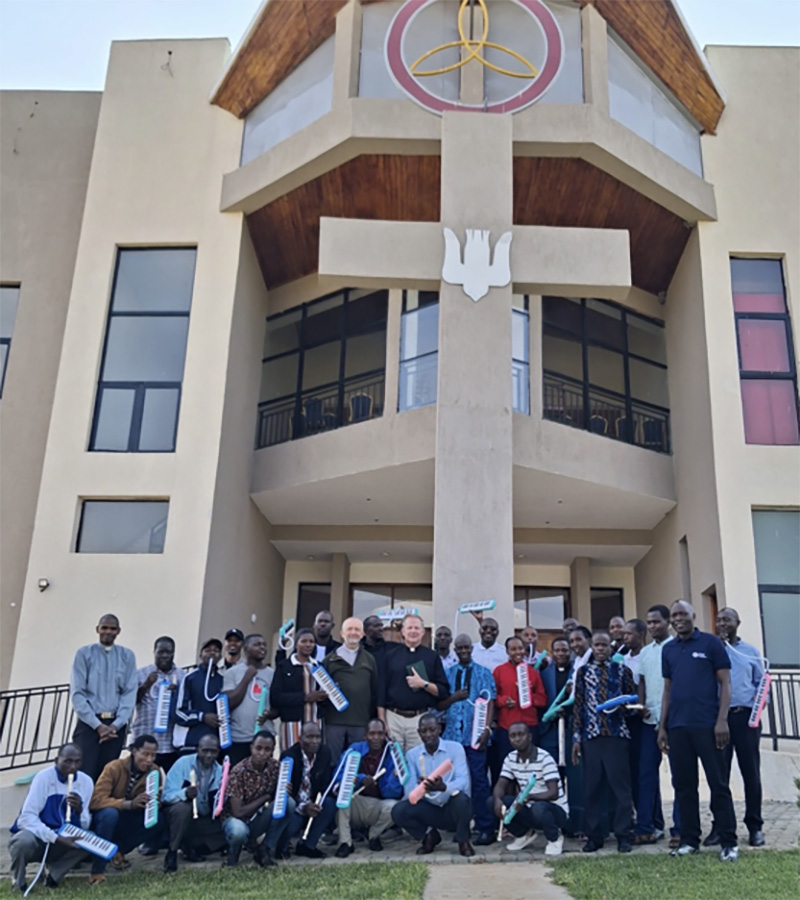
The beautiful chapel was our ‘Jerusalem’ — a wonderful setting for student-led worship in English and Swahili. I am pleased to report that, thanks to the efforts of Lutheran Heritage Foundation and Deaconess Sandra Rhein, sacred music educator now serving in Asia, the Swahili hymnal is a rich resource, thoroughly and unabashedly Lutheran. The index of authors reveals several hymns by Martin Luther and Paul Gerhardt, emblematic of a faithful Lutheran hymnal.
I was the only one who did not speak Swahili, but my hosts were very gracious. I was able to sing and understand the service because the texts and music are adapted directly from the Lutheran Service Book.
Music transcends culture (transcultural, not multicultural), so the music of, say, “A Mighty Fortress” triggered the English text in my head and allowed me to sing with understanding. When the Scriptures were read aloud in Swahili, someone was always kind enough to open their Bible app to the English text and share it with me. (Yes, a church can be liturgical and welcome visitors!)
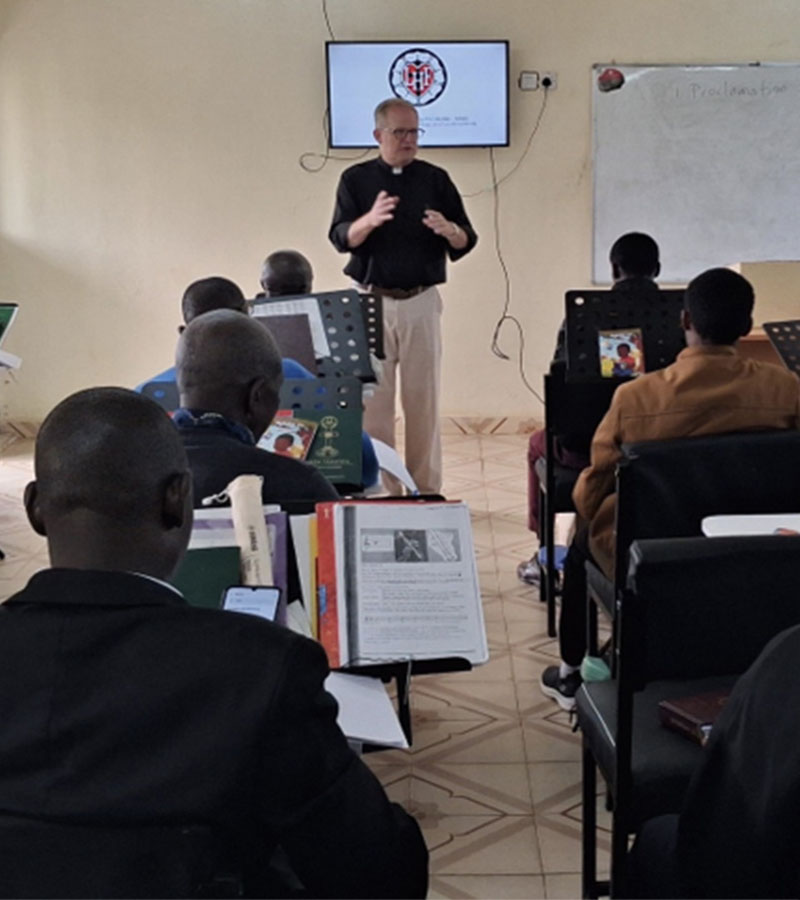
Between the morning and evening prayer offices, we gathered in a classroom, which was our ‘Athens.’ I was privileged to lecture on the church year and the history and elements of sacred music. After covering this foundation, I gave our faithful students a tour of Reformation hymnody, post-Reformation hymnody and hymnody from the United States. This was followed by tactical modules on how to use and teach the hymnal and how to select hymns for any given occasion.
Finally, we covered sacred music in Matins, Vespers and occasional services. The final exam on Friday might have been the instigator of several offers for a free ride to the airport, but the students all passed, some with a little help from a translator.
Gifts for the global church
The benefits that the students pay forward to their congregations are manifold. They are now equipped with basic instruments (none of them will return home to a pipe organ) to assist with pitch standards, basic musical literacy and instrumental support for singing. The students have several printed books and other printed documents which they can add to their limited resources and use to enrich their musical pedagogy and liturgical leadership.
They now have a new network of colleagues and friends, with whom they can communicate and consult on matters of theology and sacred music. Having spent eight weeks in a “tight” fellowship of learning, eating and worshiping together, they know that they are never alone, but are part of a universal communion of saints that is united in the worship of the Lamb.
Perhaps above all, they have a deeper understanding of every facet of the church’s song. The students understand how to evaluate a hymn by the same standard that we evaluate sermons, such as the quality of the poetry, the strength of the Law, and the consolation of the Gospel contained within the hymn.
They are prepared to teach hymns by using the voice as the best teacher of the human voice, using call and response (“lining it out”), navigating modest resources, and doing so with the full confidence that, even amidst the numerous obstacles to good church music, the high and holy doxology to Father, Son and Holy Spirit is always worth the effort.
How might the reader support global theological education?
Provide for global missionary work by supporting the LCMS Office of International Mission and Lutheran Heritage Foundation.
Persevere during these difficult days for the church, knowing that the Lord still prays for His church. Even if she appears to be outwardly weak and frail, the Lord of the church will not fail to lead her to the celestial city.
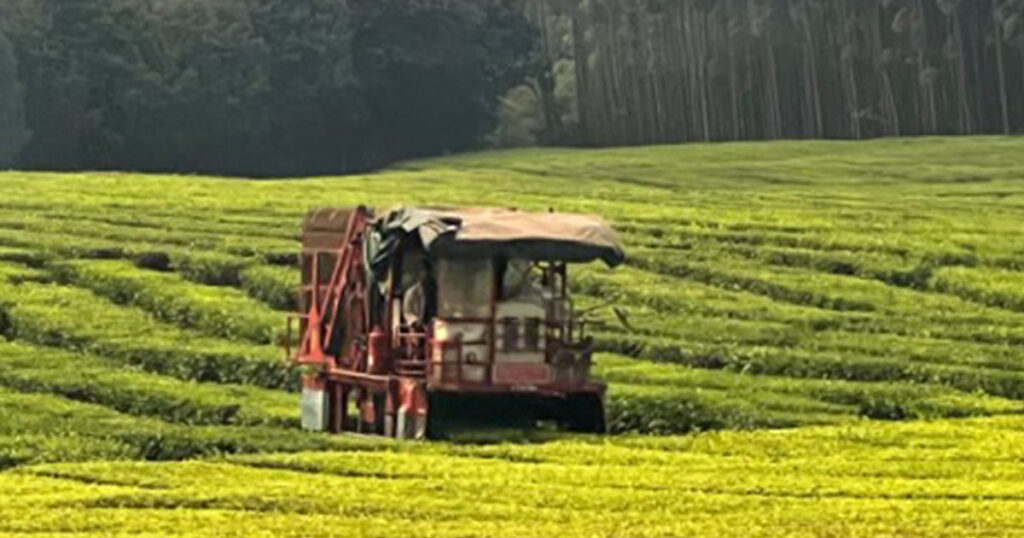
Finally, pray that the Lord of the harvest will continue to send laborers into the fields, where, like the Kenyan tea fields pictured above, there will be a bountiful harvest — thirty-, sixty-, and a hundredfold.
God grant it!
Visit lcms.org/servenow to find your opportunity to serve the Lord and His people internationally through the LCMS.