
Lutheran Spotlight: Nicolaus Decius
The contributions of Nicolaus Decius to Lutheran hymnody, although few, actually predate the first published hymns of Martin Luther by one year.

The contributions of Nicolaus Decius to Lutheran hymnody, although few, actually predate the first published hymns of Martin Luther by one year.
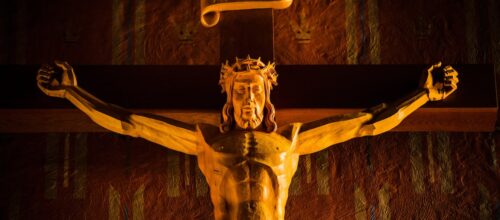
In the Large Catechism on the First Commandment Luther says, “There has never been a nation so wicked that it did not establish and maintain some sort of worship. All people have set up their own god, to whom they looked for blessings, help, and comfort.

These 40 devotions — which each include a Scripture passage, a meditation, a prayer and a hymn — are focused on bringing God’s comfort and peace to those who are struggling after a disaster or other crisis.
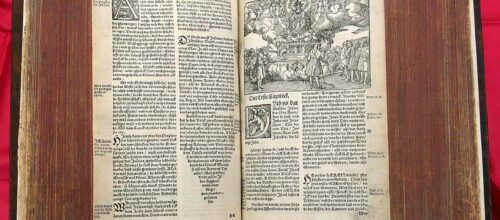
Is the Bible true? Is it really reliable or is it full of errors? Doesn’t it contradict itself? Luther and other Lutheran Reformers answered these questions in no uncertain terms, defending the inerrancy of Scripture with gusto.
Since Martin Luther, Lutherans have held to the clarity of Scripture, insisting that Scripture is clear. But what does that mean?
During the years leading up to the Reformation, the Roman papacy had convinced much of Christendom that the Scriptures were not enough to settle questions of doctrine and life.
Central to the project of the Lutheran Reformation was the restoration of the supreme authority of Scripture within the life of the Church.
Johann Gerhard (1582-1637) died as a professor of theology at the University of Jena, a post he had held for twenty-one years. His popularity there was evidenced by the fact that he received and turned down over twenty calls during his time as a professor.
The essays focused on the role of theological education and individual catechesis.
A lot of people think they know what “sin” is, but usually see their remedy to sin as “try harder, do better.” This not only confuses the remedy, but also the ailment!
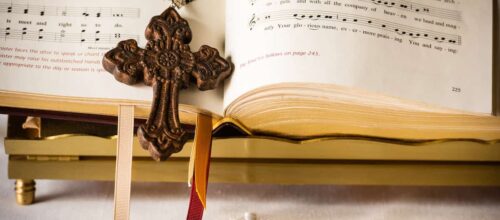
The Formula of Concord has two parts, the Epitome and the Solid Declaration. Together, these comprise the final document of the Book of Concord (1580), or the Confessions of the Evangelical Lutheran Church.
The connection between the salvation given to the human race in the flood and the eternal salvation distributed in holy baptism cannot be overlooked. St. Peter writes...
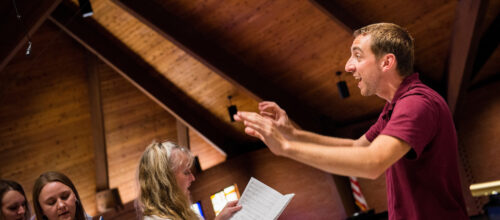
Presented by LCMS Worship, the Institute was held under the theme “The Just Live by Faith: Make it Plain in Sermon, Service, Song.”
July 30 is the commemoration of Robert Barnes, Confessor and Martyr. But his name might not be well known, even among those who study the Lutheran Reformation in Germany.
Bach’s connection and admiration of Luther stems from his childhood; in particular, his early education. Born in 1685 in Eisenach in Thuringia, Bach spent three years at the Latin school that Luther had attended two centuries prior.