
Comfort in the Righteousness of God
In his 1545 preface Luther noted how he once hated “the righteousness of God,” of which Paul spoke in Romans 1:17...

In his 1545 preface Luther noted how he once hated “the righteousness of God,” of which Paul spoke in Romans 1:17...
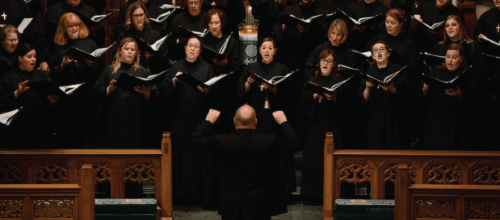
The precise motivation for Luther’s text is unclear, yet evidence exists that it spread quickly and gained notoriety in significant fashion. It was sung at the Diet of Augsburg (1555) and in all the churches of Saxony.

Today most modern societies would find it hard to imagine a time when the Holy Scriptures were not accessible to them in a language they could understand, but to the people at the time of the Reformation this was the accepted norm.
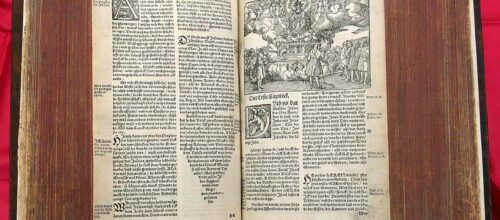
Is the Bible true? Is it really reliable or is it full of errors? Doesn’t it contradict itself? Luther and other Lutheran Reformers answered these questions in no uncertain terms, defending the inerrancy of Scripture with gusto.
Since Martin Luther, Lutherans have held to the clarity of Scripture, insisting that Scripture is clear. But what does that mean?
During the years leading up to the Reformation, the Roman papacy had convinced much of Christendom that the Scriptures were not enough to settle questions of doctrine and life.
Central to the project of the Lutheran Reformation was the restoration of the supreme authority of Scripture within the life of the Church.
Theologically, this chorale is based on the work of the third Person of the Holy Trinity, the Holy Spirit (Ghost), who is expressly celebrated on the Day of Pentecost.

The Reformation was birthed by adults, but it is preserved by children. For centuries, pastors and parents have been preaching a holy heritage into the ears of the young, clearly confessing a salvation by grace alone through faith alone in Christ alone.

Luther’s emphasis on heeding the call to love and patience is insistent in these sermons. It even impacts that essential distinction between the “musts” and the “free.” Luther can see that even in the things which are “musts” and are matters of necessity, such as believing in Christ, love nevertheless never uses force or undue constraint.
The Gospel reading for Invocavit is Satan’s temptation of Jesus in the wilderness. While Luther never explicitly refers to the text, he warns his hearers of succumbing to the devil’s temptations when they neglect the Word of God.
On Invocavit Sunday (the First Sunday in Lent), 1522, Martin Luther began a series of eight short sermons in which he taught the people of Wittenberg how the reformation of the Church should be carried out.
To consider Christ’s glorious Transfiguration on its own is eye-opening; to hear how Luther describes this glory as yours nearly bursts the eyes from their sockets, bringing hope to the Christian heart.

The manual offers a step-by-step approach from forming a core group to becoming a fully established congregation in the LCMS.
Based on Psalm 45, the hymn quickly became extremely popular in Germany and was used for a variety of occasions. The tune is believed to be a reconstruction of “Jauchzet dem Herren, alle lande,” Psalm 100, included in Wolff Köphel’s Psalter (1538).